


Vessel Movement: What the Data Shows
Weathernews' AIS vessel movement data analysis across the Persian Gulf reflects two broad phases of activity since February 28, 2026 — an initial period of heightened movement, followed by a significant reduction in transit activity — consistent with the widely reported instability of the security situation in the region.
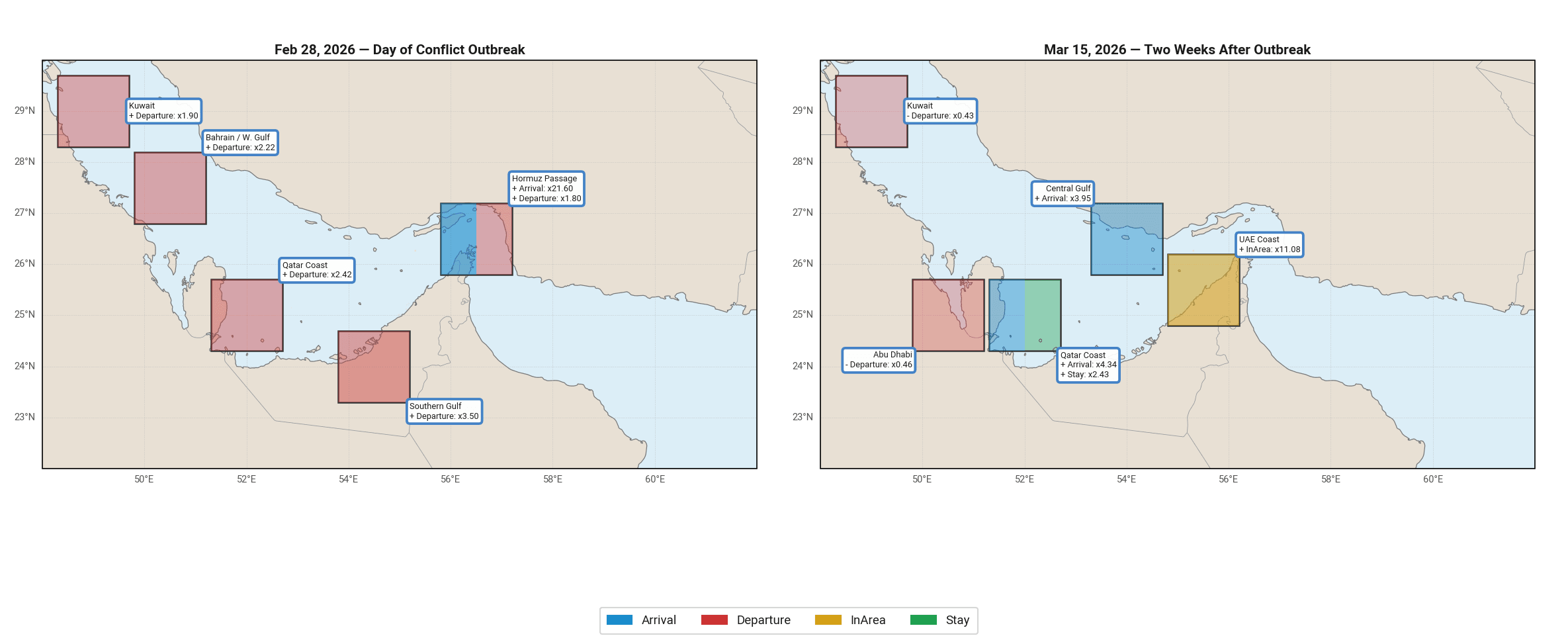
AIS Analysis by Weathernews Inc.; AIS Source Data: Marine Traffic by Kpler
On February 28, arrivals in the central Hormuz Passage surged to 21.6 times the prior day's count, while departures spiked across multiple Gulf cells. By March 15, the picture appears to have reversed: departures from Kuwait-area waters had collapsed to less than half of normal levels, and vessels in the UAE coastal zone were recorded at 11 times the usual in-area count — suggesting ships anchored, drifting or waiting.
As a direct comparison, the Qatar Coast zone shares this pattern: a departure surge on February 28 (×2.4) appears to have become an arrival and stay accumulation by March 15 (arrivals ×4.3, vessels staying ×2.4).
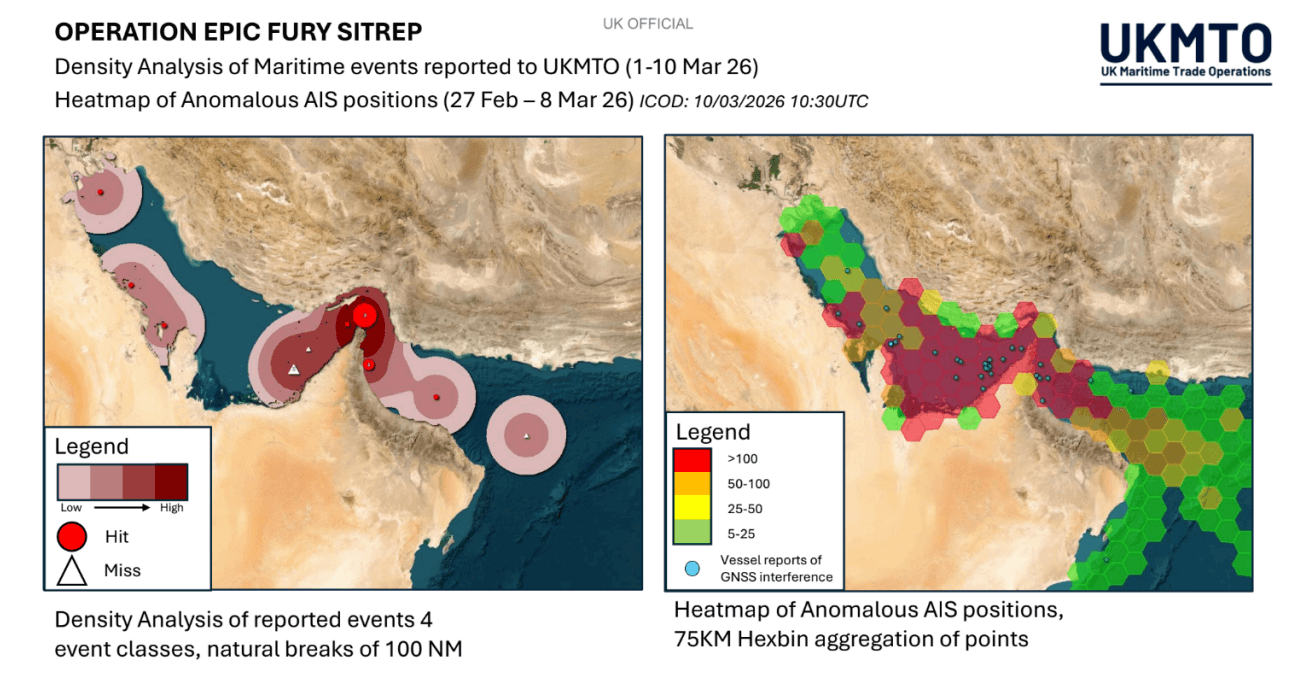
GPS spoofing and AIS interference incidents are widespread across the region during this period; extreme single-day spikes in individual grid cells should therefore be treated with caution. (Source: UKMTO JMIC Advisory No. 10, March 2026)
Weather in the Strait
For the significant number of vessels now anchored or stationary across the region, weather conditions in the strait are an important factor to keep in mind.
While the Persian Gulf is generally a region largely sheltered from severe weather systems - major storms and tropical cyclones rarely affect it - February to April marks a peak window for two types of wind events that anchored vessels should be aware of.
The first is the Shamal - a strong northwesterly wind that can set in for one to several days at a time. Drawing on Weathernews' five-year statistical port climatology data, a trend of westerly to northwesterly winds dominating at both Dubai and Fujairah has been observed during this period, notably with March seeing the strongest conditions and gusts of up to 25–30 knots recorded at Fujairah. Not every strong wind event during this window will be a Shamal, but the pattern is worth monitoring closely.
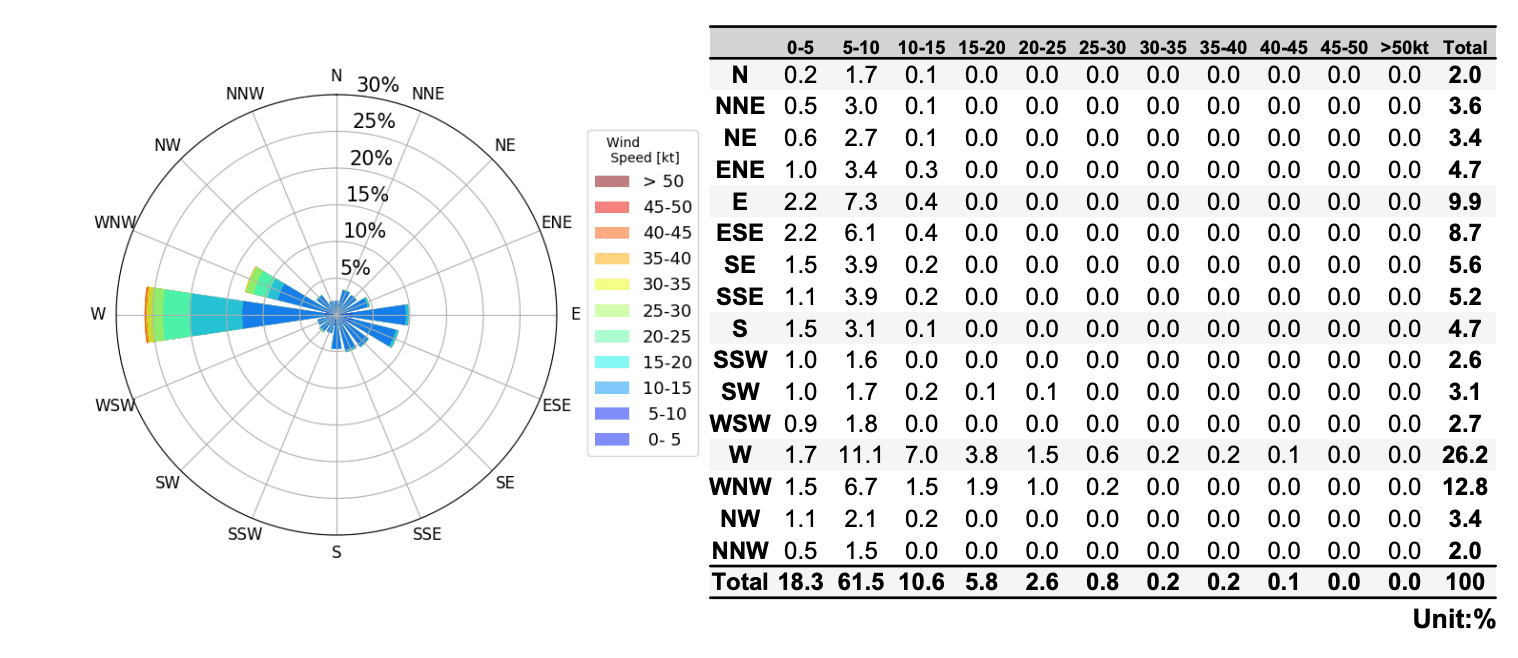
Fujairah Port — Wind Rose (March, 5-Year Climatology) | Source: Weathernews Inc.
Vessels anchored off Bandar Abbas face a different exposure — predominantly southwesterly winds — while Sohar, further into the Gulf of Oman, offers comparatively more sheltered conditions.
The second potential hazard is sudden squalls - brief but intense bursts of wind, sometimes accompanied by thunderstorms. Analysis of gust occurrences in the Eastern Persian Gulf and UAE area found that these peak in spring, and can develop suddenly.
Weathernews continues to monitor both AIS movement patterns and regional weather conditions across the Persian Gulf to support informed operational decisions.