

For years, global headlines have highlighted a rapidly shrinking Arctic. Data from the Japan Meteorological Agency reveals the Arctic loses a Hokkaido-sized area of minimum ice annually, fueling maritime dreams of wide-open Polar Routes. In fact, the winter of 2026 tied the record for the lowest Arctic sea ice maximum ever observed. Yet, the ocean recently delivered a stark reminder to the shipping industry: a warming climate does not eliminate freezing hazards; it makes them dangerously volatile.
In March 2026, driven by a "wavy" jet stream and persistent Arctic winds, sea ice in the eastern Bering Sea defied global trends. It expanded by a staggering 60% in just two weeks. A massive expanse of ice was pushed abnormally far south, reaching within 30 miles of Unimak Pass.
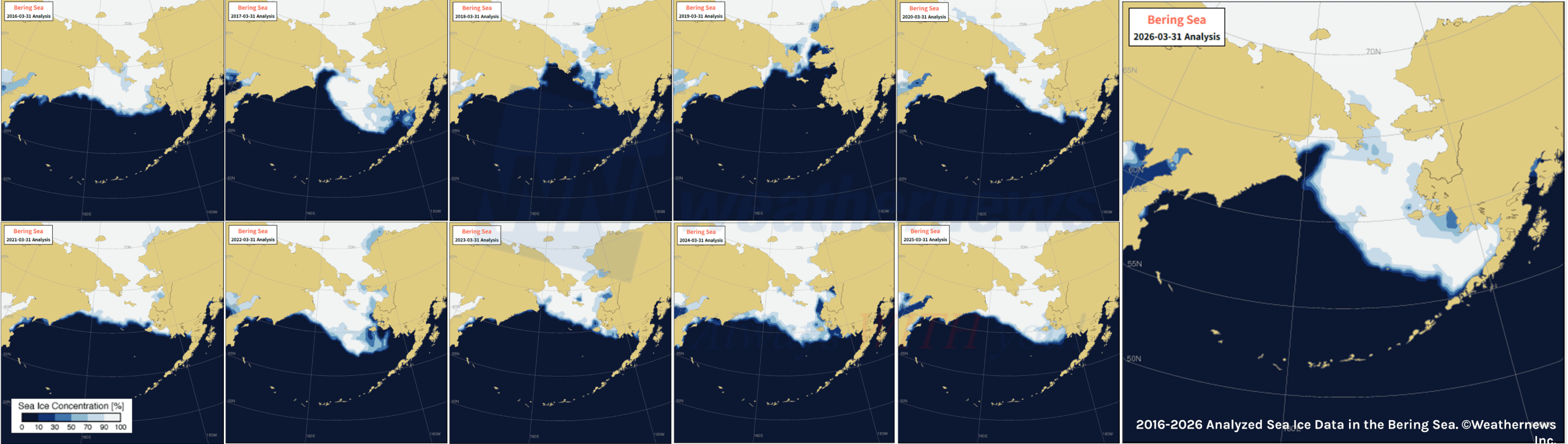
Bering Sea Ice on March 31: 2016–2026 Progression (Viewing top-left to bottom-right, with 2026 enlarged)
Why Sea Ice Is More Than Just an Obstacle
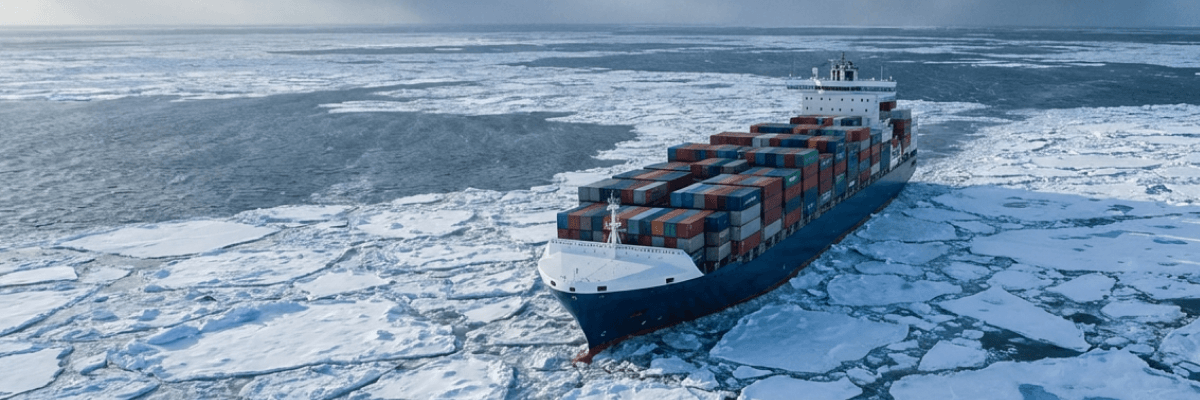
For maritime vessels, sea ice is not merely an obstacle, but a dynamic and destructive force capable of crushing a ship's hull. At the same time, navigating these freezing polar regions presents a completely separate risk: severe superstructure icing. This distinct phenomenon, where wind-whipped sea spray freezes instantly upon hitting the ship, can critically destabilize a vessel. To mitigate these hazards, the International Maritime Organization (IMO) Polar Code established strict routing measures and 'Areas to be Avoided' in the Bering Sea. But what happens when anomalous sea ice chokes the very routes deemed historically safe?
Unimak Pass Under Threat: Why Historical Averages Are No Longer Enough
Standard maritime climatology dictates that ships sailing westbound from North America to Asia during the spring transition routinely rely on routes straight through Unimak Pass. This strategy usually keeps vessels safely north of the violent low-pressure storms churning south of the Aleutian Islands. The 2026 anomaly abruptly threatened this vital logistical artery.
The disruption is clearly visible in the data. According to our internal Weathernews analysis of Automatic Identification System (AIS) data (AIS source data: Marine Traffic by Kpler) for cargo and tanker vessels, the advancing freeze triggered a major logistical shift away from standard historical routes. Traffic density through the alternative Amukta Pass (~52.5°N) surged by an 800% increase in March 2026 compared to the previous year. Simultaneously, vessels opting to abandon the Bering Sea altogether drove an 88% year-on-year increase in traffic on routes strictly south of the Aleutians.
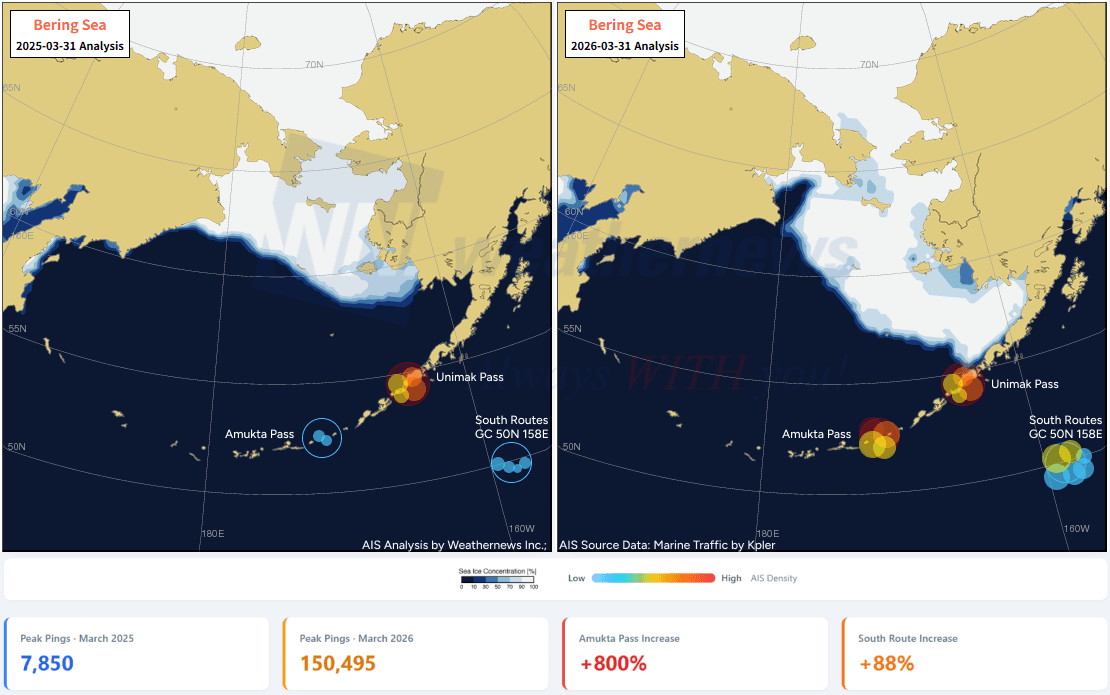
This extreme contrast between long-term melting trends and sudden local freezes is the new maritime reality. Operating safely requires acknowledging that historical averages can transform into localized extremes overnight. Relying on past climatology alone is no longer sufficient.
To protect supply chains and safeguard crews, the Weathernews Voyage Planning team and our dedicated Global Ice Center operates 24/7/365. By constantly monitoring volatile sea ice movements and providing expert, real-time weather routing, Weathernews ensures that vessels can safely navigate whatever the modern oceans throw their way.