

THE FEELING ON THE FLOOR
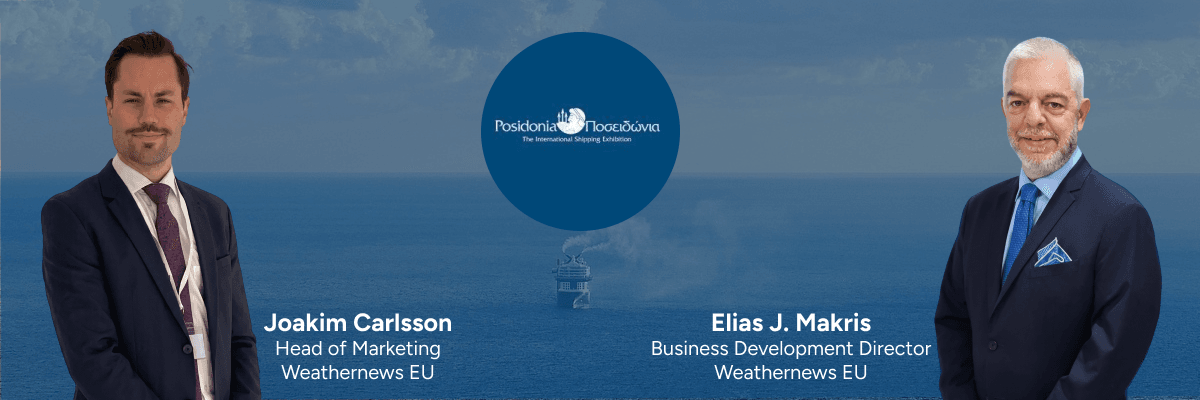
Posidonia takes place every two years in Athens, and for those working in maritime, the rhythm of the event is part of its identity. For Joakim, this was his third time attending as an exhibitor and what stood out was not just the scale but the quality of interaction.
Over a few days, the Weathernews team met with customers, partners and prospects from across the world, people they had worked with for years but in many cases had never met in person. Those conversations, Joakim notes, tend to change the working relationship afterward in ways that are difficult to achieve through video calls alone.
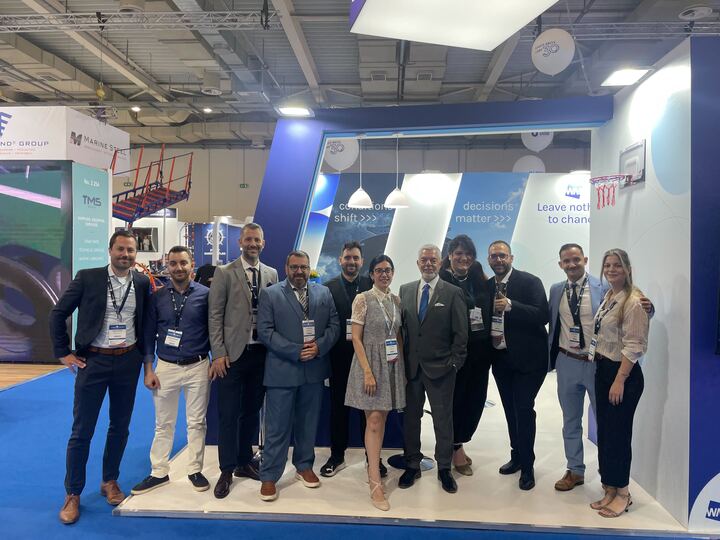
Elias points to a different kind of energy, the team itself. The exhibition is demanding by nature, but the shared sense of purpose within the Weathernews group made the experience rewarding rather than exhausting.
WHAT THE INDUSTRY IS FOCUSED ON
Across hundreds of conversations, a clear set of priorities emerged. Two topics came up across nearly every conversation at the event: decarbonization and AI.
Shipowners and operators are actively looking for solutions that can support a credible transition toward lower emissions, all the while keeping pace with a regulatory environment that is growing more complex by the year. Understanding compliance requirements, managing fuel consumption and optimizing voyage performance have become closely interconnected challenges that operators are trying to address, not just as sustainability goals but as commercial ones.
The conversation around AI has also shifted since previous years. Where earlier discussions tended to be exploratory, the questions being asked at Posidonia 2026 were more specific. People want to know where AI actually reduces workload, where it improves decision quality and how it can connect systems and teams rather than simply automate tasks in isolation. As Joakim observed, the industry is increasingly asking practical questions rather than theoretical ones.
Geopolitics added another dimension to the discussions. The situation around the Strait of Hormuz was on many people's minds. It raised a broader point, that uncertainty in shipping now comes from multiple directions, not just weather.
Regulatory changes, route disruptions and external events have all become as relevant to operational planning as the forecast itself.
THE CONVERSATIONS THAT STAYED
With that broader context in mind, the visitors who came to the booth brought different questions depending on their relationship with the company.
Existing customers were focused on where services are heading, how the product offering is evolving, what new capabilities are being introduced and how Weathernews is adapting to the demands of a more complex operational environment. Companies encountering Weathernews for the first time were more interested in differentiation. Conversations centered on how the company combines weather intelligence with human expertise and what that means for the decisions operators make on a daily basis.
Across both groups, the common thread was a search for a long-term partner rather than a transactional supplier. The industry is looking for relationships that can grow with its needs.
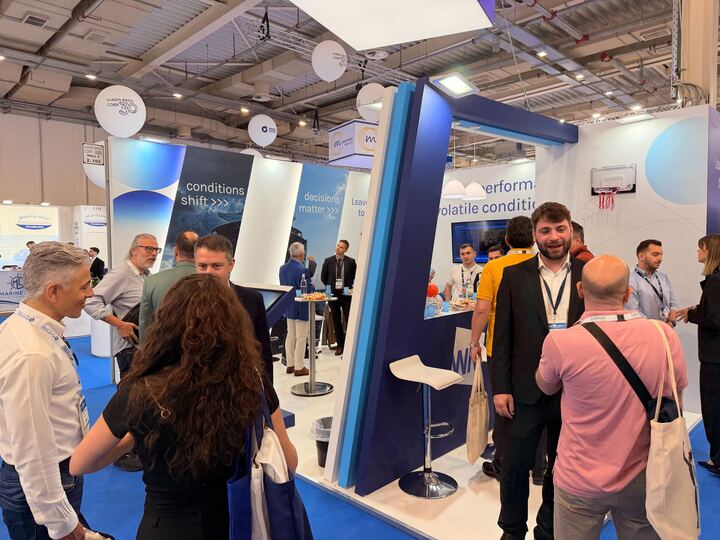
One exchange stood apart from the rest. The master of a vessel operated by a Weathernews customer stopped by, not to discuss contracts or services, but to express his appreciation directly. He described how the support Weathernews provides affects the decisions crews make at sea, in conditions that are often demanding and high-pressure. For Elias, the conversation was a grounding moment in the middle of a busy exhibition floor. Behind the pipeline of opportunities and commercial discussions, the work ultimately serves the people navigating difficult conditions far from shore. That reminder, he notes, stayed with him long after the event ended.
AFTER THE EXHIBITION
Beyond the immediate results, both Elias and Joakim returned from Posidonia a sharper sense of where the industry is heading and how Weathernews needs to respond.
Joakim especially observed that conversations consistently shifted from individual products toward workflows. How systems, teams and data sources can function better together. Whether the topic was weather, AI, emissions or fleet performance, the underlying question was the same. For Weathernews, that pattern carries a practical implication: communicating value means explaining how solutions fit into the way customers actually work, not just what those solutions are capable of.
Those insights will carry forward beyond Posidonia. Weathernews will also be present at the Thessaloniki International Fair, bringing the same commitment to weather intelligence and sustainability to a wider stage — with a focus on energy, nature protection, and the company's evolution toward AI-driven services with human expertise at the core.