

Shipping’s performance challenge is really a decision problem
Ask most shipping operators what their biggest data challenge is, and the conversation quickly turns to forecasting accuracy. Better predictions, earlier warnings, finer resolution. The assumption is simple: if disruption can be seen more clearly, it can be managed more effectively.
That assumption is reasonable, but forecast accuracy alone is no longer the binding constraint.
Analysis of North Atlantic conditions over recent years shows no clear long-term increase in the severity or frequency of extreme winters. What has changed is the range of potential weather outcomes. The gap between the mildest and most disruptive periods is widening, making conditions harder to manage because the variance is greater. One season looks nothing like the last.
This distinction matters because most planning models are built around averages. They can absorb the occasional severe event. What they struggle with is structural variability, where the range of possible outcomes expands and historical norms become less reliable.
The question, then, is whether information supports decisions that are timely, connected and commercially aligned while those decisions can still change the outcome.
The wrong benchmark
The 2025-26 North Atlantic winter made this clear. Weathernews analysis showed conditions comparable to the severe winter of 2013-14, with persistent low-pressure systems concentrated around the English Channel and Bay of Biscay creating sustained bottlenecks. Some vessels were unable to make meaningful progress for days. In one case, a vessel travelling from the UK to the Gulf of Mexico drifted for four days, with no routing option that maintained schedule without materially increasing weather exposure.
Yet despite conditions approaching historical severity levels, the resulting damage ratio was lower, indicating that better forecasting, routing and risk management had a measurable effect.
But if severe conditions can produce less damage, while relatively moderate periods can still generate poor commercial outcomes, then the variable that matters operationally is how well operators understand where a voyage is projected to perform relative to normal conditions, and how quickly they can respond when that changes.
Shipping still tends to assess weather retrospectively: this winter was bad, that season was unusually calm. What is missing is a consistent way to quantify severity in real time and connect it directly to operational and commercial decisions.
This is where the Accumulated Wave Energy (AWE) Index becomes relevant. By combining the intensity and persistence of ocean conditions into a single metric, benchmarked against data going back to 1979, it creates a consistent basis for comparison across events, periods and regions including how severe conditions were, how unusual and how long they lasted.
This is analogous to how hurricane categories transformed decision-making around tropical cyclones: the kind of shared language that could enable entirely different conversations between operators, insurers, commercial teams and regulators. The AWE Index does the same for the chronic, persistent disruption that defines most of what shipping actually faces.
Alongside this, Weathernews’ enhanced wave and wind forecasting model reduces wave height prediction error by approximately 23% compared to conventional methods, analysing more than 80 ensemble scenarios with coverage extending up to 15 days ahead. Together, these capabilities allow operators to answer two questions at once: what is coming, and how does it compare to what we have faced before?
Stronger forecasting and better measurement are essential, but they are only part of what is required.
When disruption is understood too late
Most operational decisions are still made without the full picture at hand and in one place. Weather is assessed in one system, vessel performance in another, and commercial constraints are understood somewhere else entirely. Each input may be accurate in isolation, but they are rarely brought together in a way that reflects the full reality of the voyage.
This fragmentation creates a familiar pattern. Decisions are technically informed, but not fully contextualised. Risk is managed reactively rather than proactively, with adjustments made once disruption is already constraining available options. Once disruption reaches a certain threshold, it cannot be optimised away. The outcome is determined earlier, when decisions are still flexible.
The commercial impact is immediate. Delays extend voyage time, increase fuel consumption and emissions exposure, and create knock-on effects across scheduling, charter performance and CII ratings. In many cases, the gap that determines the outcome is not weather severity but the distance between available information and the point at which it is used to inform a decision.
This is the pattern that our recent work with Saga Welco identified and exemplifies. When customers began requesting more detailed CO2 emissions reporting, Saga Welco worked with Weathernews to build a validated data infrastructure.
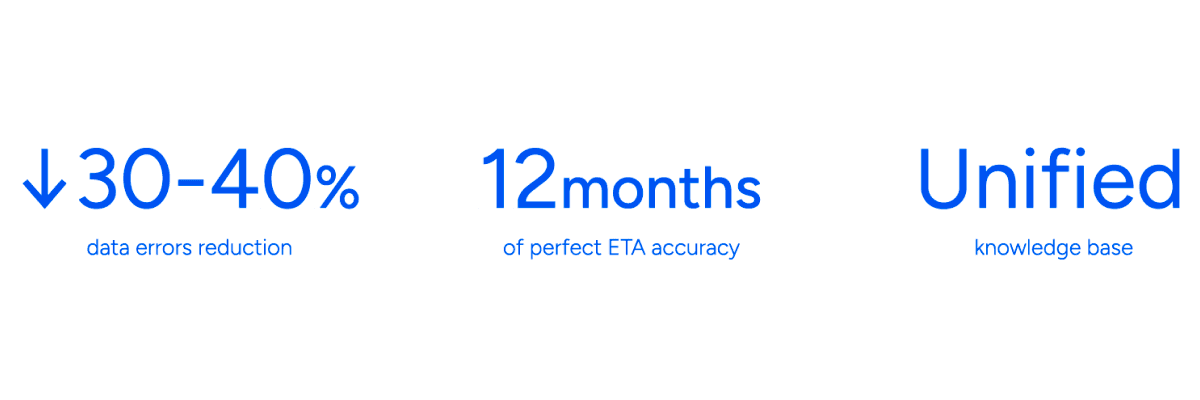
Despite full operational control over its fleet, discrepancies existed in the data flowing from vessels that internal oversight could not reliably detect. Solving the problem required creating a shared view of performance that technical, operational, emissions and commercial teams could trust simultaneously. It has resulted in a 30-40% reduction in data errors and twelve consecutive months without a missed ETA since implementation.
The broader lesson is this: the value of data is defined by whether it supports decisions that are consistent, timely and aligned across the organisation. Shipping has responded to a more volatile environment in broadly the right way: better forecasting, stronger routing, improved awareness of weather risk. But adaptation at scale requires more than improving individual tools in isolation.
It requires connecting weather intelligence to operational and commercial decision-making in a way that reflects how decisions compound across a voyage. A weather deviation adds time. Time increases fuel burn. Speed adjustments affect CII performance. CII performance influences future charter selection. Each step affects the next.
This is where the conversation moves beyond forecasting and into asset intelligence – the integration of weather, vessel condition, operational performance and commercial context into a single, continuously updated picture of the voyage. Routing, speed, fuel use and asset performance cannot be managed independently without creating unintended consequences elsewhere. Understanding what is happening around the vessel and what is happening within it, and how those factors interact, is what makes connected decision-making possible.
The next competitive advantage lies in connecting data into decisions early enough for them to matter.