

At Weathernews, we have been tracking the potential impact of the "Shamal" — a northwesterly wind typical of this season in the Persian Gulf — as well as squalls, on the safe navigation of vessels in the region.
In our previous analysis, we examined fleet-wide AIS positional data and found that vessels were exhibiting heading changes consistent with "swinging on anchor" — rotating in response to daily tides and wind directions. Building on that fleet-wide picture, we zoomed in on the movements of a single vessel to illustrate what these movements actually look like in practice.
A Tanker at Anchor: 48 Hours Off Dubai
This animation records the movements of a crude oil tanker approximately 240 meters in length, anchored approximately 22 nautical miles northwest of Dubai Port, from the early hours of April 5th through the early hours of April 7th (local time). This vessel is representative of the anchoring behavior observed across the vessels highlighted in our previous analysis.
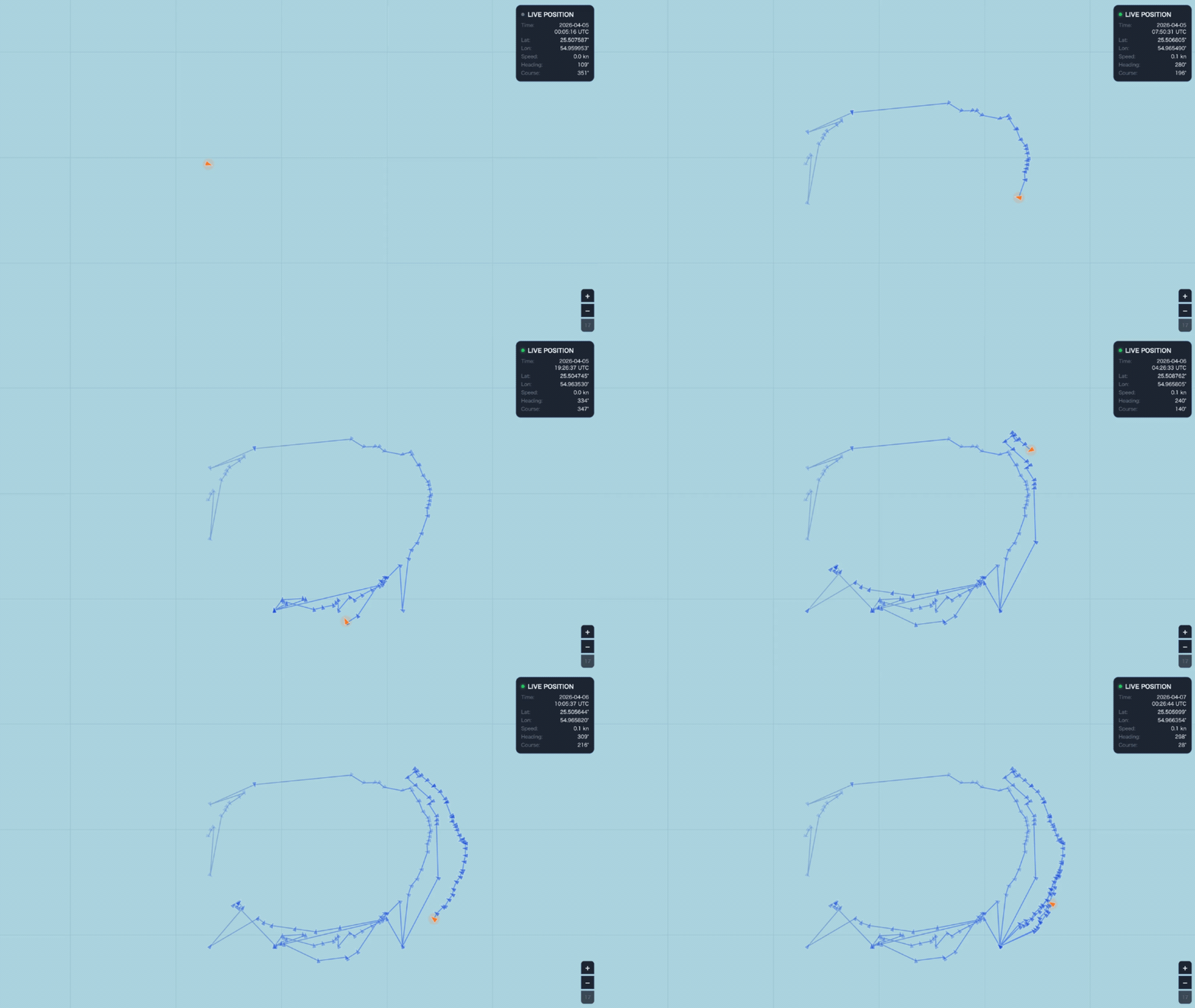
AIS Analysis by Weathernews Inc.; AIS Source Data: Marine Traffic by Kpler
During this period, the area was dominated by northwesterly winds due to the prevailing pressure pattern. Wind speeds varied from a minimum of 2–3 m/s to a maximum of 10–15 m/s, and tidal currents alternated between northwesterly and southeasterly directions in approximately 6-hour cycles.
Vessel Behavior Under Weather and Sea Conditions
The movement appears consistent with single-anchor mooring behavior — where the vessel swings in a circular arc around a fixed anchor point, tethered by the anchor chain, as wind and tidal currents shift throughout the day. Rather than active maneuvering, this suggests a natural, passive response to the local winds and tides.
- April 5th: Winds were light, and the vessel moved primarily along the tidal current.
- April 6th–7th: As winds strengthened, wind influence became dominant over tidal flow, and the hull was consistently pushed downwind (toward the right and lower-right on screen).
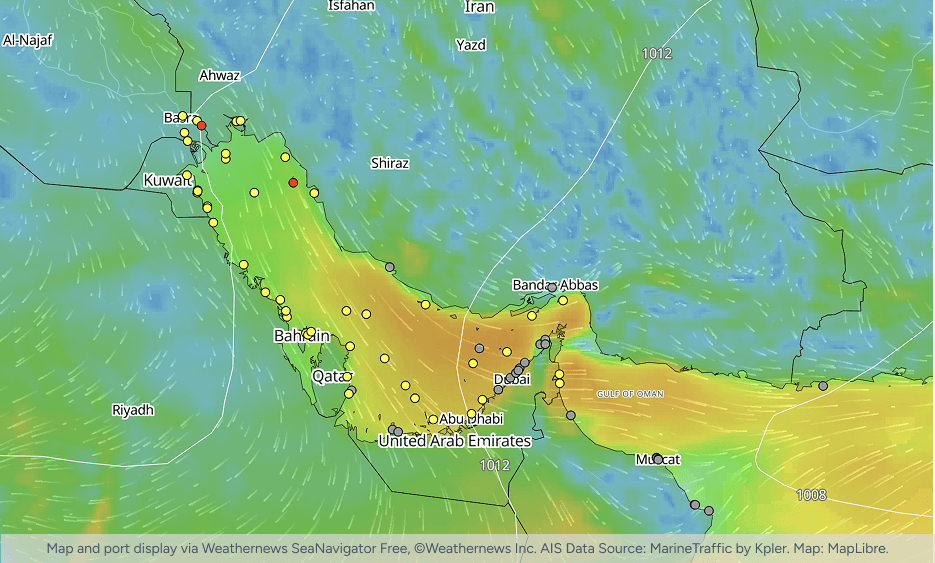
Surface pressure, wind and wave patterns over the Hormuz Strait at 00:00 UTC, April 7, 2026
The Importance of Weather Monitoring for Safety Management
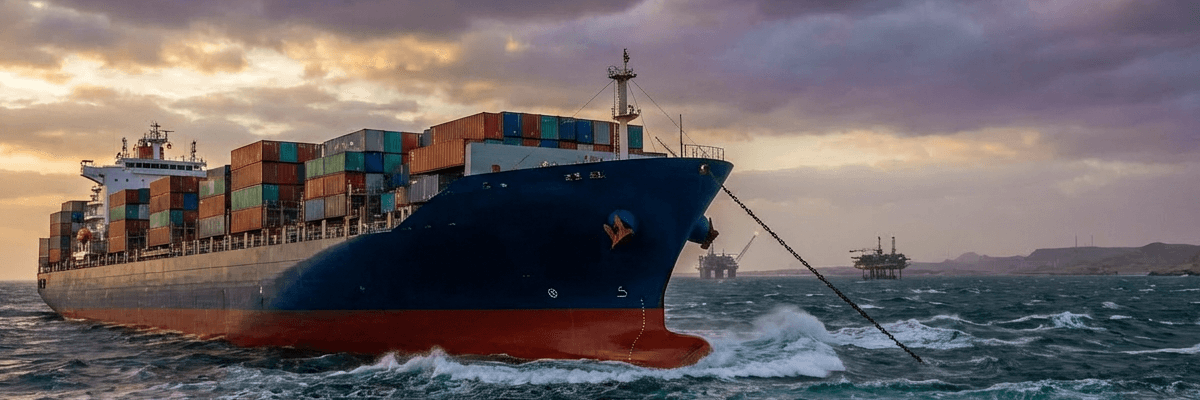
Under normal circumstances, wind speeds of this level are manageable for maintaining position under single-anchor mooring. However, during severe storms such as tropical cyclones, the risk of anchor dragging increases significantly.
Anchor dragging can directly lead to serious maritime accidents, including collisions with other vessels or grounding. Therefore, when severe weather is anticipated, precautionary measures are taken — such as deploying both anchors, or evacuating to a wider, more sheltered sea area away from the storm's influence without anchoring.
In the current situation, rapid evacuation outside the Gulf remains difficult for the 600+ vessels stranded in the region. With many vessels continuing to hold position with limited fuel reserves, the timing of any transit attempt requires careful assessment of the prevailing weather and sea conditions.
Available Forecasts on SeaNavigator Free
Driven by our commitment to maritime safety, Weathernews is providing these general weather trends as a reference for the public and stakeholders navigating this complex situation.
For a limited time, we are publicly disclosing port forecasts for the Middle East via our platform SeaNavigator Free. We monitor 150 locations across the region and its surrounding waters, updating four times daily with 48-hour, 5-day, and 7-day outlooks.
View Full Port List & Detailed Forecasts on SeaNavigator Free
Major Ports with Published Port Forecasts
Persian Gulf Region
- United Arab Emirates: Abu Dhabi Port, Dubai Port, Fujairah Port, Khor Fakkan Port, Mubarak Terminal, Fateh Terminal
- Iran: Bandar Abbas Port, Larak Island
- Qatar: Doha Port, Ras Laffan Port
- Bahrain: Bahrain Port, Sitra Port
- Saudi Arabia: Ras Tanura Port, Jubail Port
- Kuwait: Kuwait Port
- Iraq: Al Basrah Oil Terminal
Approximately 150 locations are covered, including ports in the Red Sea and the west coast of India.