



A Localized Signal, Not a Regional One
When a magnitude 7.1 earthquake struck Japan's Kumamoto Prefecture on July 28, the immediate concern was human: a death toll that would climb past 38 within days, thousands of damaged buildings, and tens of thousands sheltering through a record-breaking heatwave. But for the region's ports, vessel tracking data tells a more specific story — one of an earthquake that hit hard in one place and barely registered elsewhere.
At Yatsushiro Port, AIS activity dropped to zero vessels on July 30, two days after the quake — a clean signal of a port brought to a full stop (AIS Source Data: Marine Traffic by Kpler). At Kumamoto Port, roughly 40 kilometers away, vessel activity never paused at all. And at Hakata, the region's largest port and the most likely destination for any diverted cargo, AIS data shows no meaningful increase in traffic — no sign that shippers facing disruption elsewhere needed a larger alternative port. Unlike Venezuela's La Guaira, where a comparable earthquake forced a sustained shutdown and a diversion of cargo to another port entirely, Kumamoto's maritime disruption stayed contained to a single port, and even there, recovery was already underway within days.
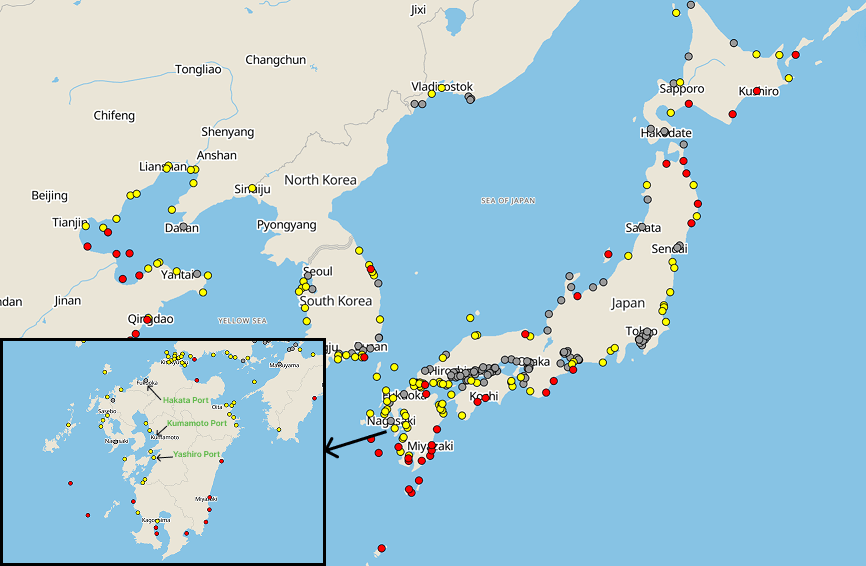
Map of Kyushu, Japan, highlighting key ports (Hakata Port, Kumamoto Port, and Yatsushiro Port). (OpenStreetMap via SeaNavigator)
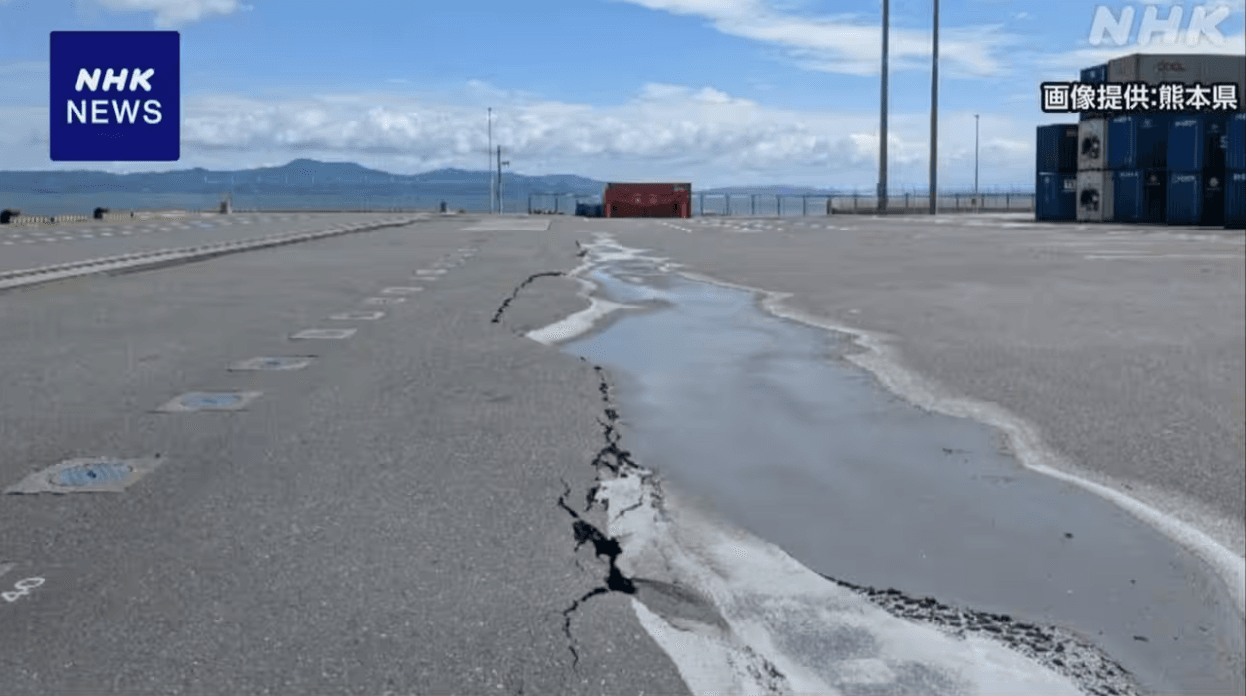
Damage reported at nine ports managed by Kumamoto Prefecture, Yatsushiro City, and others, including liquefaction and cracking, per Japan's Ministry of Land, Infrastructure, Transport and Tourism. Photo provided by Kumamoto Prefecture (画像提供:熊本県), via NHK NEWS WEB, "熊本県や八代市など管理の9港 液状化や亀裂などの被害 国交省," July 30, 2026, 21:25 JST. https://news.web.nhk/newsweb/na/na-k10015191251000
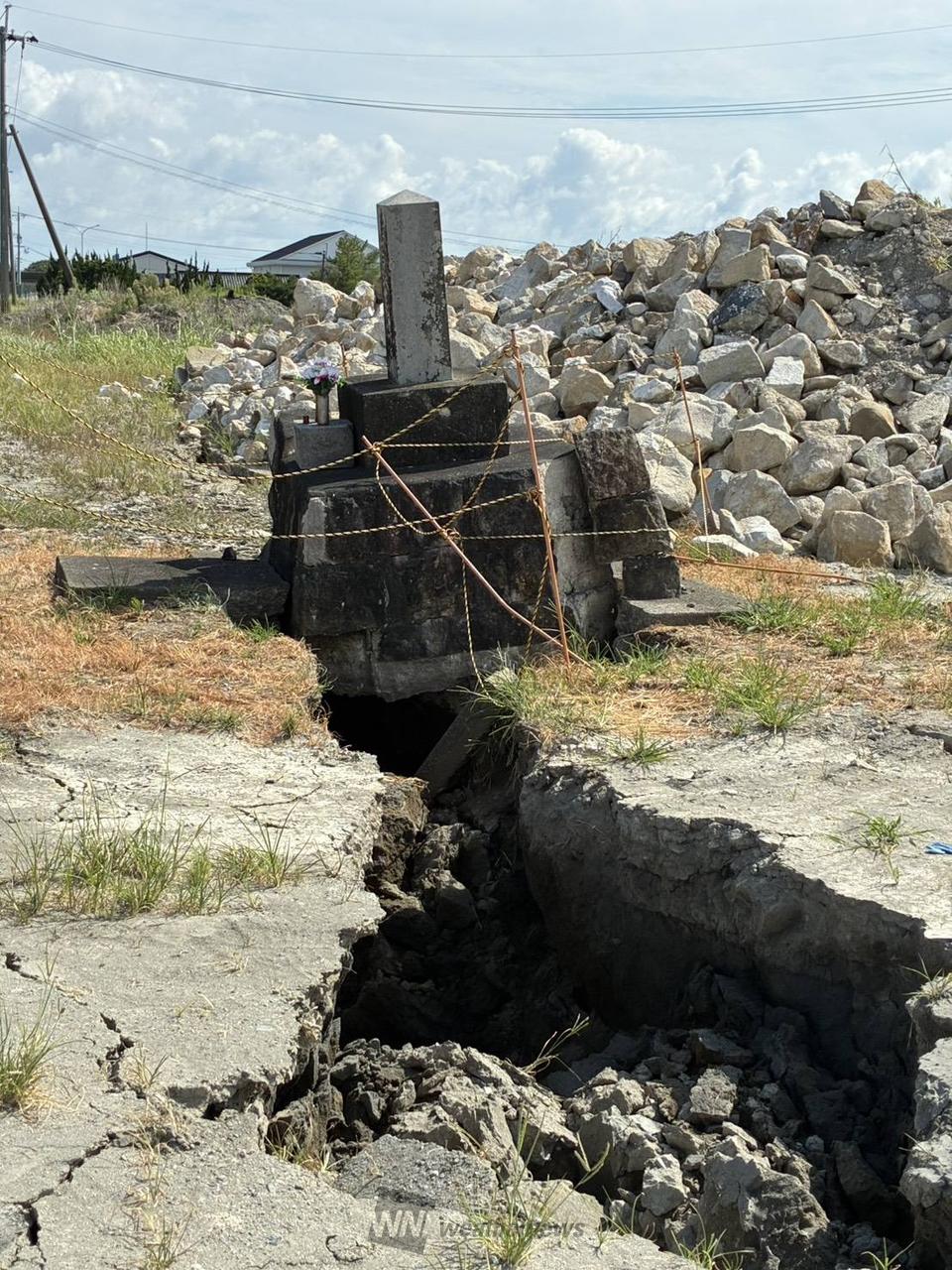
"There are deep cracks and road bulges everywhere along the Yatsushiro Sea embankment where I used to walk my dog every day. Photo: Earthquake Damage Report via Weathernews App. Reporter: kokotetsu* (No. 361818908) | Yatsushiro City, Kumamoto (July 31, 2026). Source: https://wxrepo.weathernews.jp/report/kyushu/kumamoto/117410407/
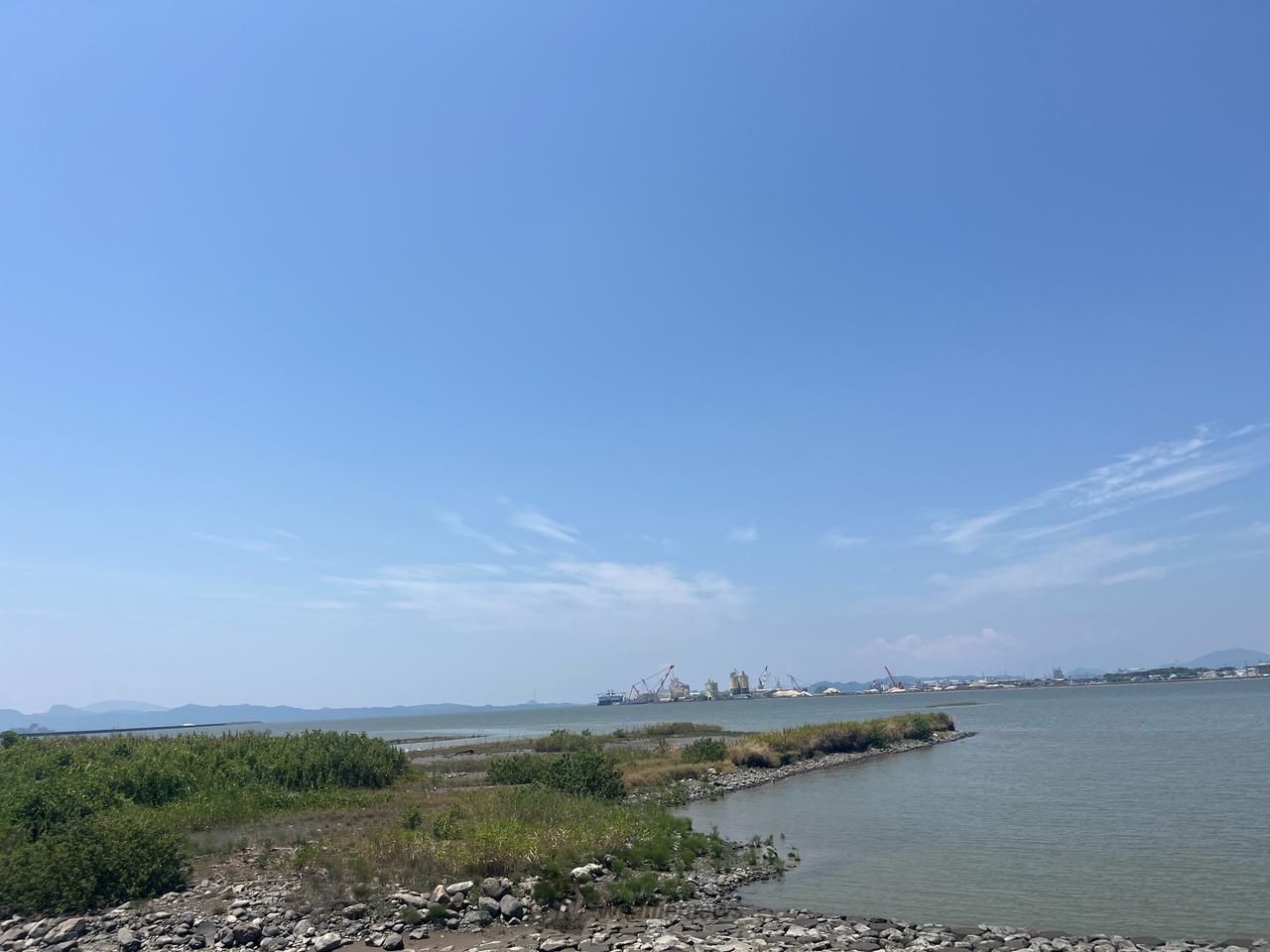
"Work underway for disaster recovery." Photo: Weather Report via Weathernews App. Reporter: Smile Candy (No. 523486431) | Yatsushiro City, Kumamoto (August 2, 2026). Source: https://wxrepo.weathernews.jp/report/kyushu/kumamoto/117527433/
How the Two Ports Diverged
Yatsushiro Port handles an estimated half of Kumamoto Prefecture's total trade value, mostly livestock feed grain and industrial raw materials — feed grain, chemicals, and wood products among them — that supply local manufacturers and Kyushu's agricultural sector. The earthquake caused liquefaction and a significant displacement behind the port's outer breakwater, and AIS data shows the practical result: vessel traffic fell sharply in the days after the quake, bottoming out at zero on July 30. Berths reopened in stages over the following week — first for emergency water-supply vessels, then gradually for larger relief ships — and by August 2, AIS activity had climbed back to its highest point in the observation window. But that recovery has a caveat: port officials have said inspections remain focused on emergency supply transport, and general cargo handling is being considered only case-by-case. There is no confirmed date for a full return to routine commercial operations.
Kumamoto Port serves a different role entirely — a container and ferry hub whose cargo mix leans toward containerized and general cargo, including recycled-use materials and industrial machinery, with trade routes to China, South Korea, and a Kobe feeder service. Its ferry loading bridge was struck and disabled by a vessel that broke loose during the shaking, and a container gantry crane also sustained damage. But AIS data shows steady, uninterrupted vessel activity throughout — dipping only briefly before climbing to its highest levels of the monitoring period in early August. The port's Shimabara ferry service, one of its key regional links, resumed vehicle traffic within two days and pedestrian boarding within four, even as repairs to its damaged boarding gate continued. Unlike Yatsushiro, nothing here suggests a port that needed to pause.
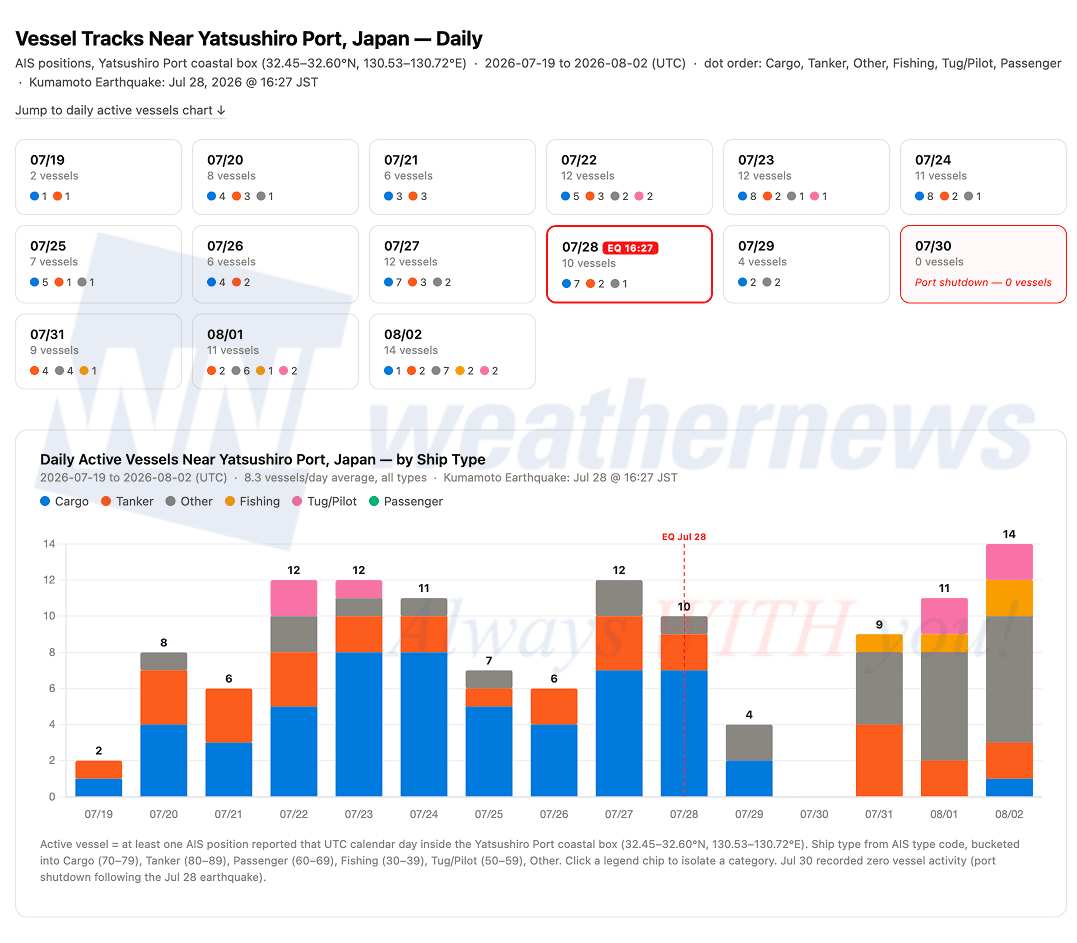
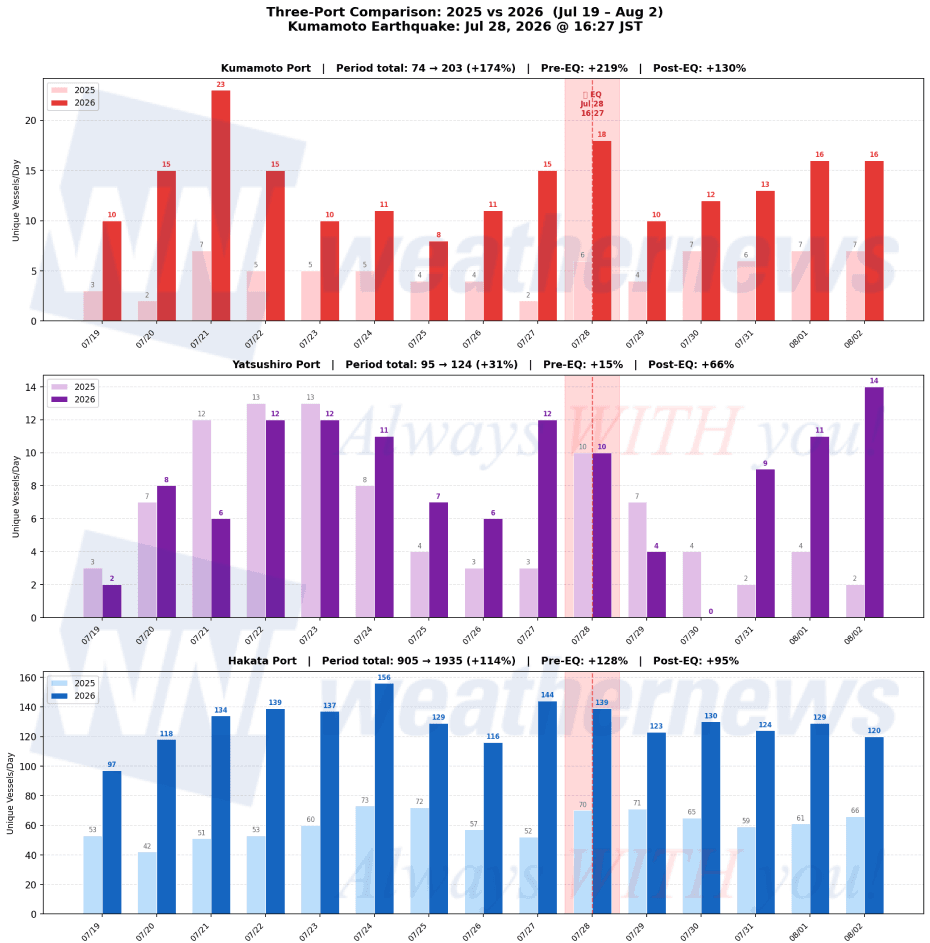
AIS Analysis by Weathernews Inc.; AIS Source Data: Marine Traffic by Kpler
One caveat is worth flagging plainly: AIS activity in 2026 is running well above the same period in 2025 across all three ports, for reasons this data alone can't explain — it may reflect broader traffic growth, changes in AIS coverage, or something else entirely. That makes Yatsushiro's shutdown-and-recovery pattern the clearest earthquake-specific signal in the dataset; the other ports' year-on-year gains should be read with more caution.
A Ship Doing Something It's Never Done Before
With commercial cargo handling limited at Yatsushiro, the Japan Coast Guard, the Ministry of Defense, and Japan's transport ministry have used the port's available berths to run water, bathing, and relief supply operations — effectively standing in for commercial traffic while the port recovers. One detail stands out: two of the relief vessels deployed to Yatsushiro this time, Kaiki and Kaikō, were also used for water supply during Kumamoto's 2016 earthquake — then at Kumamoto Port, not Yatsushiro. A decade later, the same ships are doing similar work at a different port in the same prefecture.
Separately, Japan activated ship-based medical care for the first time on August 5, under a law passed in 2021 that had never been used until now. A vessel moored at Yatsushiro Port began offering walk-in medical care — no appointment needed — to residents whose local clinics were damaged in the quake. It's a narrow but telling example of how the region's maritime infrastructure is being repurposed for needs well beyond shipping.
Heat, and a Typhoon to Watch
Kumamoto's recovery is unfolding under difficult conditions. On August 3, the city recorded 40.3°C — its first-ever "extreme heat day" since records began in 1890 — and at least one heat-related death has been confirmed among evacuees sheltering in the aftermath. It's part of why the medical ship's role has taken on added urgency: officials have cited reducing heat-related harm among displaced residents as a specific goal.
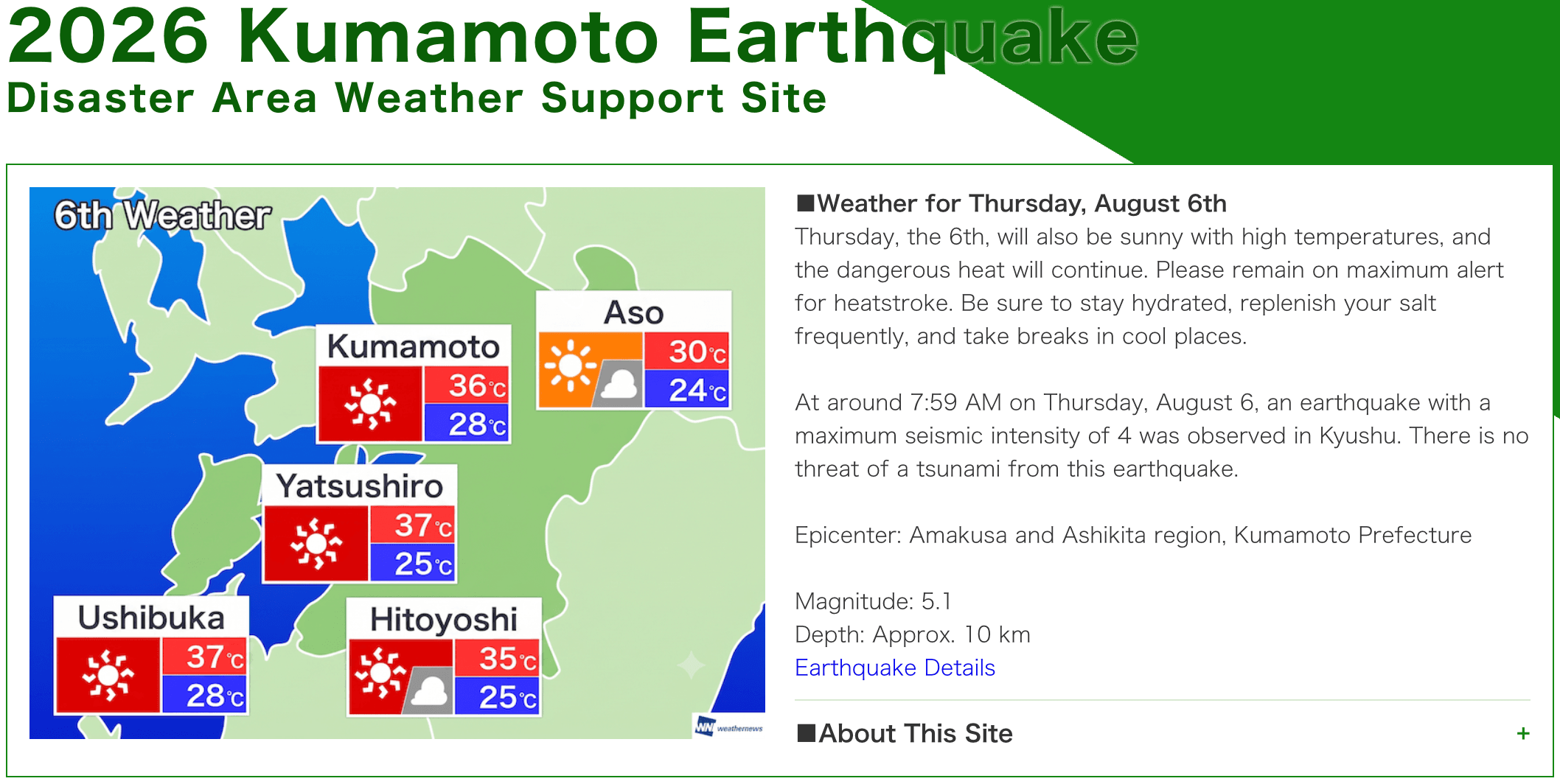
Weathernews Inc. 2026 Kumamoto Earthquake Disaster Area Weather Support Site, https://weathernews.jp/info/news/quake_kumamoto2026_en/
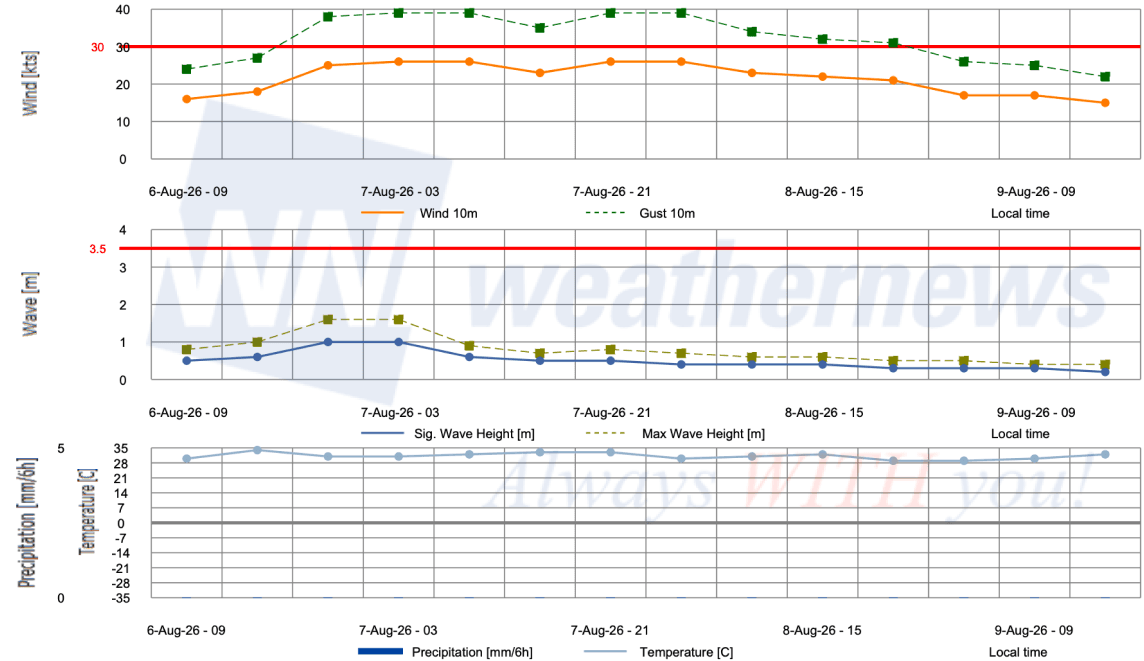
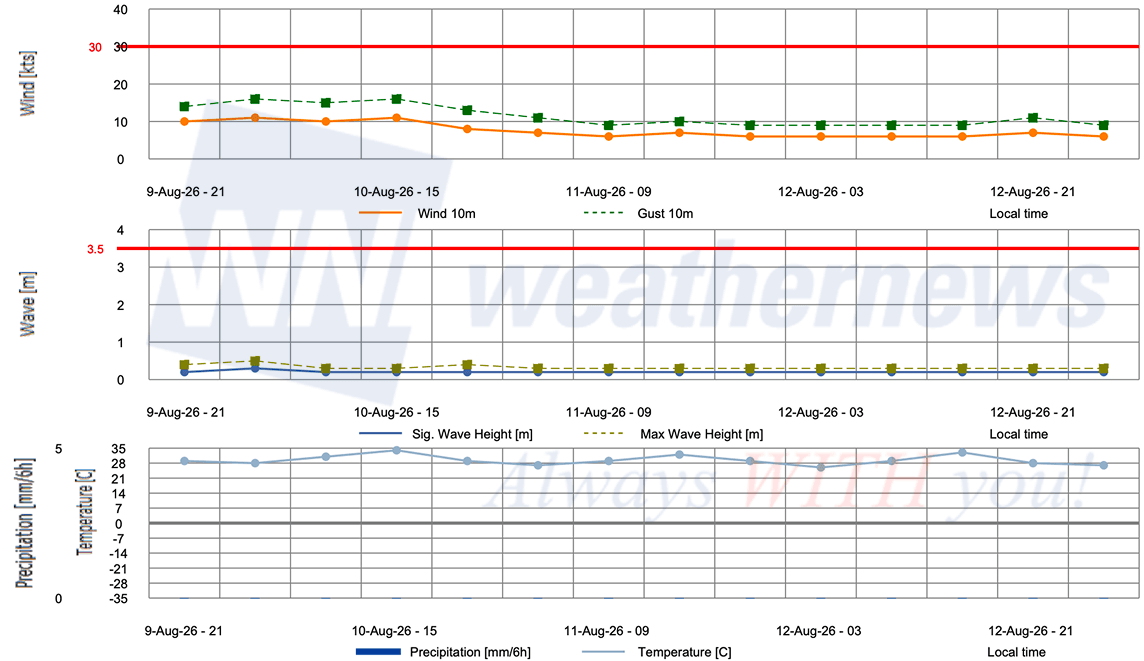
Further out, Typhoon Dolphin is tracking toward Taiwan as of August 6, with forecasts showing it entering the East China Sea by August 8 before continuing toward the Chinese coast in the days that follow. Its exact path remains subject to change — a curve back toward Kyushu could still test port infrastructure that's operating under liquefaction-related restrictions at Yatsushiro.
Port Forecast for YATSUSHIRO, Kumamoto, Japan
What to Watch
Yatsushiro's return to commercial cargo. Recovery so far has been relief-driven, not commercial. Watch for whether general cargo activity appears in the data.
Typhoon Dolphin's path through the East China Sea, expected by August 8. Any curve back toward Kyushu would test a port system still recovering.
Aftershock risk on nearby fault segments, which Japanese authorities have flagged as a possible, if unconfirmed, ongoing concern.
What We Know — and Why It's Limited
Japan's earthquake response is unusually well-documented — frequent updates from the Japan Meteorological Agency (JMA), the Ministry of Land, Infrastructure, Transport and Tourism (MLIT), and the geological survey have made it possible to track port conditions in far more detail than is typical after a disaster of this scale. Even so, some figures remain provisional, including differences between Japanese and international magnitude estimates, and thousands of damaged buildings were still being assessed as of early August.
The AIS findings here should be read with one limitation in mind: this analysis can identify what happened at each port, but it can't fully explain a broader year-on-year rise in vessel activity across the region that predates the earthquake. Where that broader trend is absent — as it is at Yatsushiro — the earthquake's signal comes through clearly. Elsewhere, it's one factor among others we can't yet isolate.
Further reading on the 2026 Kumamoto Earthquake Disaster Information (Japanese): Ministry of Land, Infrastructure, Transport and Tourism (MLIT)